Visigothic Symposia (VgS) is a series of online symposia eliciting the latest and most innovative research in Visigothic studies.
The research focus is the history and archaeology of the Visigoths from the 4th century through the earlier eighth. However, Visigothic studies refers not only to the historical Visigoths – their actions, their output, and their representations – but also to their subsequent legacy, in diverse manuscripts and editions, competing historiographies, conflictual political discourses, etc., from the Middle Ages to today. Each symposium is broken into complementing themes in Visigothic studies, for example, law and theology, or literature and violence, or religion and territory.
The online symposia papers are supplemented, when possible, by formal responses by each theme’s respective participants. All papers are peer-reviewed and meet the editorial standards of Punctum Books and Gracchi Books. In total, it is intended for there to be five VgS volumes constructed as a progressive dialogic set.
We’ve disembodied (or, de-territorialized) the traditional symposium assemblage as a way: 1. to facilitate encounters between interdisciplinary Visigothic scholars from around the globe; 2. to develop an ongoing international discourse on the Visigoths; 3. to critically assess, from transnational perspectives, politically and financially motivated representations of the Visigoths; 4. to challenge hegemonic narratives; 5. and, to provide a forum for scholarly exchange in Visigothic Studies which is free and accessible (and sustainable as such), as well as within the remit of expected academic standards.
Nevertheless, we aren’t afraid of the body (or, a territorialized topography)…it still matters. In fact, the body is increasingly becoming the site of resistance to hegemony – academic and otherwise. Related to this, is the rise of object-oriented ontologies, neo-realisms, and metamodernism. To satiate this, we intend to merge mind, material and space through a mingling of reception, time, and public performance at a tbd real-life event.
We are funded by intellect and supported by scholarship.
Directors of the Visigothic Symposia series
 Dolores Castro received her PhD in History in 2017 from the University of Buenos Aires. She lectures ancient and early medieval history at Universidad Nacional de General Sarmiento (UNGS). Her research explores the fields of religion and political power in the early Middle Ages with particular focus on the ways episcopal power was developed and strengthened in the Visigothic Kingdom. She has participated in several collective projects centered on Law and Theology in the Middle Ages and collaborated in numerous workshops and conferences.
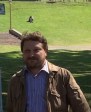 Michael J. Kelly lectures historical theory, literature, and early medieval studies at Binghamton University, SUNY. In 2021, he was a Senior Research Fellow at the RomanIslam Center, University of Hamburg, and in 2022 a Fulbright Fellow at University College Cork. Michael directs N&N and edits Gracchi Books with Catalin Taranu and the Visigothic Symposia with Dolores Castro. He has published a number of books and articles in early medieval history and historical theory and is currently a completing a monograph on the concept of “human nature” in Visigothic Spain. He is also investigating the meaning of “value” in Visigothic Spain and leading a project to develop a History blockchain for the New Digital Humanities. Prior to arriving at Binghamton, he was Associate Lecturer of Early Medieval History at the University of York (UK) and Visiting Lecturer of Early Medieval Historiography at Leeds Trinity University (UK).
Translator and Language Editor – Portuguese
 Monah N. Pereira is a Brazilian historian who specializes in Anglo-Saxon history. Her research focuses on the Alfredian period and the literary, philosophical and historical work produced in this context. Monah received her Master’s in 2016 from the Universidade Federal do Paraná in Brazil. She graduated from the same University in 2011, receiving the award of highest achiever in her class. Monah is a member of NEMED – Núcleo de Estudos Mediterrânicos (UFPR) and is part of the project ‘“Imperator et Rex”: As Vidas de Carlos Magno e Alfred o Grande’, which aims to translate into Portuguese the Vita Karoli and Asser’s Life of King Alfred. She is also a member of the editorial board of Vernáculo, a history publication which promotes the publication of student research.
Translator – Spanish
 Patricia V. Di Gialleonardo is a professional translator based in Buenos Aires, Argentina. She is regularly commissioned by the Humanities College at the University of Buenos Aires. As an undergraduate she studied Literature at the Humanities College, and later earned from the College a formal degree in English Translation Studies. She specializes in translating scientific and literary material and teaches English and Spanish as second languages for adults. She has also taught English in primary education.
 Visigothic Symposia